
Where Should You Keep A Handgun Safe? A Practical Guide Your Home
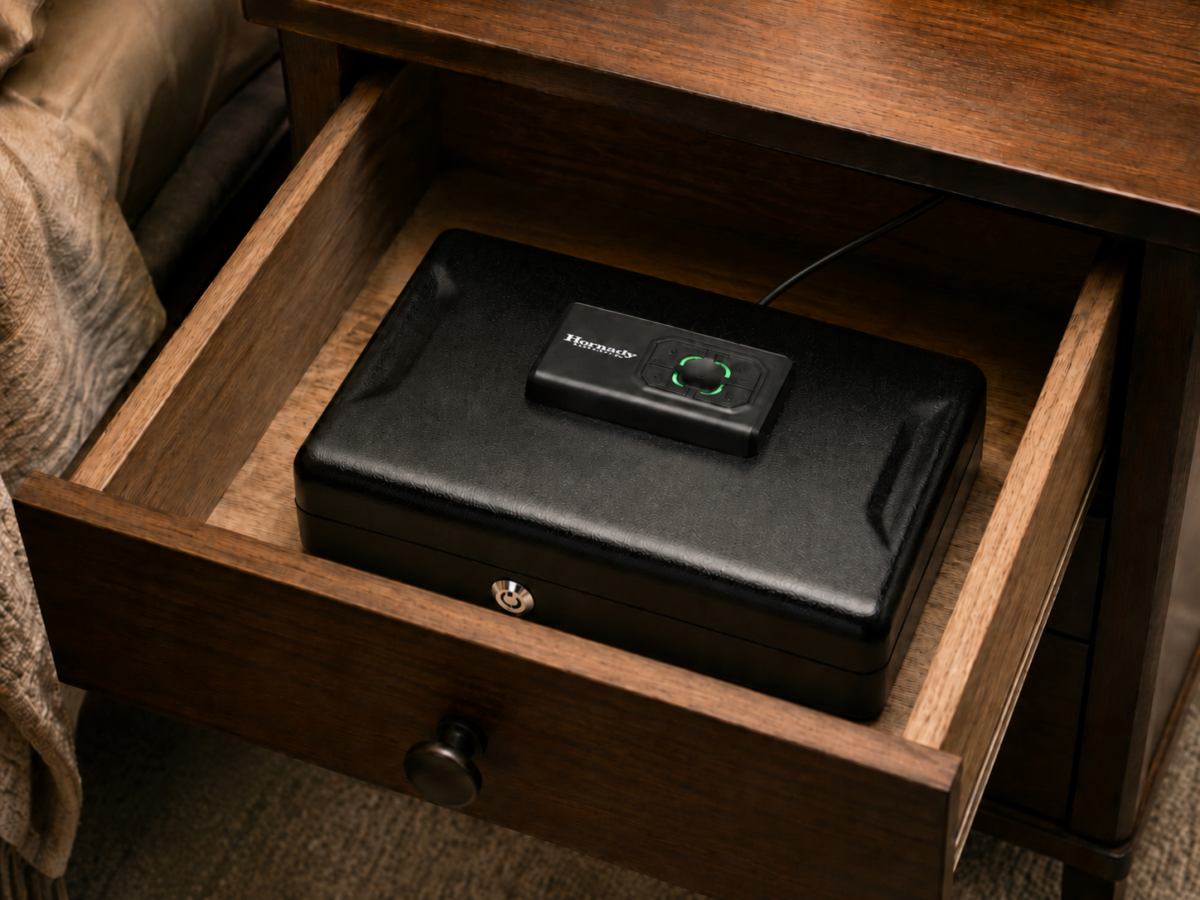
A handgun safe belongs where it balances two responsibilities: keeping your firearm secured from unauthorized access and keeping it available only to the responsible adult who is legally permitted to access it. So where should you put it? The best place is usually a private, stable, low-visibility location that fits your routine, such as a bedroom, closet, home office, or another area where the safe can be anchored and accessed responsibly.
At GrabAGun, we believe responsible firearm ownership continues long after checkout. We sell firearms, ammunition, magazines, optics, and accessories, but we also know that education matters. Our goal is to help customers legally secure, store, maintain, and understand their firearms with practical guidance that fits real homes and real routines.
Choosing the right location for your safe is not just about convenience. It is about thinking clearly before you need to make a decision under pressure. A safe that is hidden so well you avoid using it does not support everyday discipline. A safe that is too exposed may invite attention. The right placement should make responsible storage easy, repeatable, and secure.
Why Handgun Safe Placement Matters
A firearm storage plan should answer three questions before anything else:
Who should have access?
Who should not have access?
Can the safe be reached, opened, and secured consistently?
Project ChildSafe notes that secure gun storage can help prevent access by children, theft, and unauthorized use by someone who may pose a danger to themselves or others. ATF also encourages firearm owners to obey federal, state, and local laws and keep firearms secured from unauthorized access.
That is why the safest place for a handgun safe is not always the most obvious place. Many people start with the bedroom because it is private and familiar. That may be a good choice, but only if the safe is properly secured, protected from casual discovery, and not accessible to children, guests, roommates, or anyone else who should not have access.
For most homes, the best setup is a locked safe that is mounted, concealed from plain view, and used every time the handgun is not under the owner’s immediate control.
Best Places To Keep A Handgun Safe At Home
There is no single perfect location for every home. The right answer depends on your layout, who lives with you, your local laws, and your personal storage needs. These are the most common placement options and what each one does well.
Bedroom
The bedroom is one of the most common places for a handgun safe because it is private, familiar, and usually close during nighttime hours. A bedside safe, nightstand safe, or low-profile vault can work well when it is anchored and kept away from plain view.
A bedroom location works best when:
The safe can be bolted to furniture, a wall, or the floor.
The access method can be used reliably in low light.
The safe is not visible from the doorway.
Children and guests cannot reach or tamper with it.
Avoid simply placing a small safe in a nightstand drawer without securing it. A portable lockbox that is not anchored may keep out casual access, but it may not offer the same theft resistance as a mounted unit.
Closet
A closet can be a smart location for a gun safe for home storage because it provides privacy without making the safe part of the room’s visible furniture. A closet shelf, floor, or wall mount can work well for compact safes, especially when the safe is positioned behind clothing, storage bins, or other ordinary household items.
The closet is especially useful if you want a location that is out of sight but still part of your daily routine. The key is not to bury the safe so deeply that using it becomes inconvenient. Responsible storage should be easy enough to do every time.
Home Office
A home office can be a practical choice if you spend much of your day there and want secure access limited to a controlled room. A desk-mounted lockbox, cabinet safe, or wall-mounted vault can keep a firearm secured without relying on a bedroom setup.
This location works best when the office door can be controlled and the safe is attached to a solid surface. It is less ideal if children, guests, contractors, or visitors frequently enter the space without supervision.
A home office safe should be discreet. Avoid placing it where it can be seen during video calls, from a window, or by anyone walking through the room.
Entry Area Or Mudroom
Some owners consider placing a safe near an entry point because it feels convenient when leaving or returning home. This can work for certain households, but it requires extra care. Entry areas are often high-traffic spaces. Guests, delivery workers, kids, and extended family may pass through them.
A safe near an entry area should be concealed, anchored, and separated from casual traffic. In many homes, a closet near the entry is better than the open entry area itself.
Vehicle Storage
A vehicle is not an ideal long-term storage location for a firearm. Vehicles can be stolen or broken into, and temperatures can fluctuate dramatically. Still, some situations require temporary secure storage while traveling or entering a restricted location.
When vehicle storage is necessary, use a lockbox designed for vehicle use and secure it with a cable or mounting system. GrabAGun carries compact lockboxes and portable storage options, including products designed to fit in a suitcase, drawer, or under a car seat.
Do not rely on a glove box or center console as your primary storage plan unless it meets the legal and security requirements in your area.
Where Not To Keep A Handgun Safe
Some locations seem convenient but create unnecessary risks. A safe should not be placed anywhere that makes unauthorized access easier, draws attention, or discourages consistent use.
Avoid these common mistakes:
Keeping a safe in plain sight on a dresser or open shelf.
Leaving a portable safe unanchored.
Storing keys or written combinations nearby.
Putting the safe in a damp area without moisture control.
Using a location children can easily reach and observe.
Placing the safe somewhere you will avoid using because it is inconvenient.
ATF specifically cautions against leaving codes where unauthorized people can access them. That advice applies inside the home, too. A strong safe loses much of its value if the key, code, or override method is easy to find.
Should A Handgun Safe Be Hidden Or Easy To Access?
The best answer is both: hidden from unauthorized users and accessible to the responsible owner.
A safe should not be obvious to a visitor, but it also should not be so hidden that you skip using it. If you have to move five boxes, open a locked closet, and kneel behind furniture every time you secure your firearm, the setup may be too inconvenient for daily use.
A quick access handgun safe can be useful when it is placed thoughtfully. The goal is not speed at the expense of safety. The goal is controlled access. Keypads, biometric readers, RFID systems, and mechanical locks all have pros and cons. Whichever system you choose, practice opening it safely with an unloaded firearm stored separately from ammunition as appropriate for your household and local laws.
How To Choose The Right Location For Your Handgun Safe
A simple way to choose placement is to walk through your home and score each possible location on five factors.
1. Unauthorized Access Risk
Who can get near this location? Think beyond children. Consider guests, roommates, contractors, visiting relatives, and anyone who may enter the room when you are not present.
2. Visibility
Can the safe be seen from a hallway, window, doorway, or video call? If so, choose a better location or conceal it.
3. Mounting Surface
A compact safe is more secure when anchored. Look for a place where it can be mounted to a floor, wall stud, shelf, desk, or heavy furniture according to the safe manufacturer’s instructions.
4. Daily Convenience
Responsible storage should be repeatable. The best safe location is one you will actually use every time.
5. Environmental Conditions
Avoid damp basements, garages with major temperature swings, or laundry areas with high humidity unless you have moisture control. Firearms and metal safes can be affected by moisture over time.
If you need storage accessories, GrabAGun also offers broader gun storage options, including gun vaults, safes, racks, and related gear.
Handgun Safe Placement For Homes With Children
In a home with children, the storage plan needs to be stricter. Curiosity, repetition, and observation matter. A child may see more than an adult realizes, including where a key is placed or what numbers are pressed on a keypad.
For homes with children, consider these habits:
Keep firearms locked when not under your immediate control.
Store ammunition separately when appropriate for your needs and laws.
Do not share codes or keys casually.
Avoid opening the safe in front of children.
Recheck the safe after guests or family visits.
Teach age-appropriate firearm safety, but do not rely on education alone as the storage method.
NSSF’s firearm responsibility materials emphasize unloaded storage, locked storage, and ammunition stored separately in a locked location. Your local laws may add specific requirements, so always verify the rules where you live.
Handgun Safe Placement For Apartments
Apartment storage creates a few challenges. You may have limits on drilling, thinner walls, shared maintenance access, or less square footage. A closet-mounted or furniture-mounted safe may work better than a floor-mounted unit.
For renters, look for options that can be secured without causing prohibited damage. Some portable lockboxes can be attached with a cable to a heavy bed frame or other fixed object. This is not the same as a full installation, but it is usually better than leaving a lockbox loose.
A handgun safe in an apartment should also account for privacy. Maintenance staff, roommates, and visitors may have access to areas of the apartment at different times. Choose a location that keeps the safe out of normal view.
Handgun Safe Placement For Multi-Firearm Homes
If you own more than one firearm, one small safe may not be enough. A layered system often works better:
A compact handgun safe for one secured handgun.
A larger gun safe for long guns and additional firearms.
A separate locked location for ammunition when appropriate.
A storage organizer to protect firearms from contact and clutter.
GrabAGun carries compact handgun safes, larger gun vaults, and organizing accessories that can help keep firearms and valuables secured and orderly.
This is also where brand pages can help you compare options. GrabAGun offers products from storage brands such as Snap Safe, Surelock Security, and Stack-On, along with many other great products from those brands.
A Practical Room-By-Room Placement Checklist
Before installing a safe, use this checklist:
Can the safe be anchored?
Is it hidden from plain sight?
Can only authorized adults access it?
Is the access method reliable?
Is the location dry and stable?
Can you reach it without fumbling?
Will you use it every day?
Does the setup comply with your state and local laws?
If the answer to any of those questions is no, reconsider the placement before relying on it.
Check Local Laws Before You Store Or Travel
Safe storage laws can vary by state, county, and city, so always check current local requirements before deciding where to keep your handgun safe. This is especially important when traveling in a vehicle, where rules may affect whether the firearm must be unloaded, locked in a separate container, kept out of reach, or stored apart from ammunition. A lockbox that works well at home may not meet every requirement on the road, so review the laws for the places where you live, drive, stop, and park.
Choosing Responsible Access Over Convenient Hiding
The best place for a handgun safe is not the place that looks best in a photo. It is the place that supports responsible behavior every day. For many homes, that means a mounted safe in a bedroom, closet, or office. For others, it may mean a larger safe in a secured room plus a smaller quick-access unit in a private location.
Responsible storage is a habit. The safe is the tool that makes the habit easier.
When you are ready to compare options, shop GrabAGun’s handgun safes, gun vaults and safes, and broader gun storage selection to find secure storage that fits your home, your firearm, and your routine.
FAQs
Where Is The Best Place To Put A Handgun Safe?
The best place is a private, low-visibility location that can be anchored and accessed only by authorized adults. Bedrooms, closets, and home offices are common choices. Browse GrabAGun’s handgun safes to compare compact storage options.
Should I Keep My Handgun Safe In The Bedroom?
A bedroom can be a good location if the safe is mounted, concealed, and inaccessible to children, guests, or unauthorized users. A bedside setup should prioritize controlled access, not just convenience.
Is A Closet A Good Place For A Gun Safe?
Yes, a closet can be a strong choice because it keeps the safe out of plain view while still fitting into a normal routine. The safe should still be anchored and protected from moisture. See GrabAGun’s broader gun storage category for safes, vaults, and storage accessories.