
Suppressor HUB Mounts: Why They Became the Industry Standard
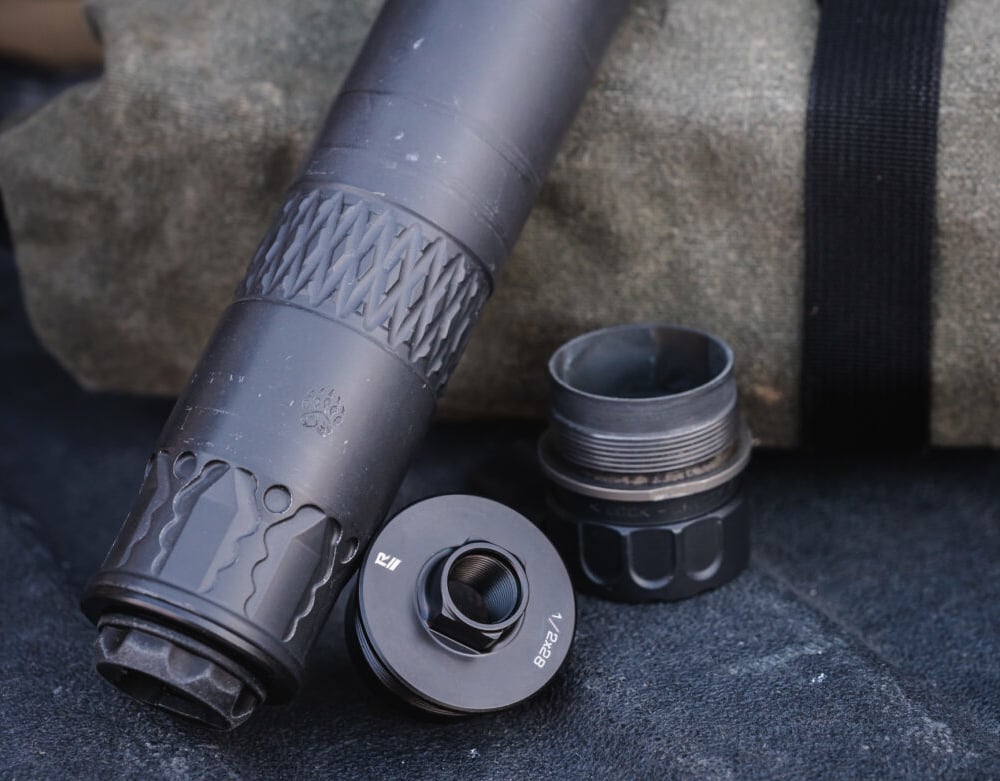
Suppressor HUB mounts solved one of the industry’s most frustrating compatibility problems: they gave suppressor owners a common interface instead of forcing every mounting decision to begin and end with one manufacturer’s ecosystem.
The idea is straightforward. Build a standard threaded interface into the rear of the suppressor, then let the shooter choose what type of mounting system goes into it.
That one change opened the door to direct-thread mounts, quick-detach systems, 3-lug mounts, and other adapters from multiple manufacturers. It also made the suppressor itself less dependent on the mounting system chosen when it was purchased.
That flexibility is why HUB has moved well beyond a feature offered by a few brands. The 1.375×24 pattern is now widely treated as the standard universal rear interface for rifle and PCC suppressors, with manufacturers large and small building suppressors and accessories around it.
What Is A Suppressor HUB Mount?
HUB stands for Hybrid Universal Base. The standard uses a 1.375×24 thread, also written as 1 3/8×24 TPI, at the rear of a compatible suppressor.
Think of it as a USB port for suppressors. The suppressor provides one standardized connection point, while different adapters can occupy that connection depending on how you want the suppressor to attach to the firearm.
The analogy is useful as long as we keep one distinction clear: HUB standardizes only one part of the mounting system.
A Dead Air KeyMo muzzle device does not suddenly work with a SilencerCo ASR adapter because both are associated with HUB products. KeyMo, ASR, Rugged Dual Taper, SureFire SOCOM, and other QD systems still have their own mating muzzle devices. What HUB changes is the rear of the suppressor. A compatible suppressor can accept the appropriate HUB adapter for the mounting ecosystem you want to use.
That distinction is what makes the standard so useful.
Watch our video on HUB mounts to learn more:
The Compatibility Problem HUB Solved
Suppressor mounting has historically involved a collection of manufacturer-specific systems.
AAC built its 51-tooth ratchet system around AAC-specification muzzle devices. SureFire SOCOM suppressors use SureFire Fast-Attach muzzle devices. Dead Air developed KeyMo, while SilencerCo built its ASR system around ASR brakes and flash hiders. Those systems can work very well, but each creates its own compatibility requirements.
That becomes expensive when you own several rifles.
If one suppressor requires one family of muzzle devices and another suppressor requires something completely different, changing suppressor brands can also mean changing hardware across multiple firearms. The mount becomes part of the purchasing commitment.
HUB separates those decisions.
With a HUB-compatible suppressor, the suppressor body and mounting ecosystem become two related but distinct choices. If your needs change later, the rear adapter can often change with them without replacing the suppressor itself.
That is a much more flexible way to build a system.
Why Did 1.375×24 Become The Industry Standard?
The thread pattern started with SilencerCo’s Bravo mounting interface, which is the 1.375×24 pattern many shooters also know as the Omega pattern. SilencerCo still calls it Bravo, while much of the rest of the suppressor industry uses the HUB name. SilencerCo identifies Bravo as the most widely used rear mount size in the suppressor industry and credits its adoption to the original SilencerCo design.
The important part is what happened after that.
Rather than every manufacturer creating another incompatible rear thread, other companies adopted the same dimensions. That gave new suppressors immediate access to a growing catalog of existing adapters and mounting systems.
The ecosystem kept expanding. Dead Air now makes HUB adapters and direct-thread mounts. YHM offers HUB direct-thread, QD, 3-lug, and booster components. Rugged makes Universal Mount and 3-lug options for 1.375×24 suppressors. Griffin Armament builds an entire category of suppressors around the standard. Energetic Armament and Resilient Suppressors also use 1.375×24 across current products.
Even manufacturers with established proprietary systems now have reasons to connect to HUB. SureFire introduced a Fast-Attach HUB adapter that lets a 1 3/8×24 suppressor interface with SureFire SOCOM Fast-Attach muzzle devices.
That is what an industry standard looks like in practice. Manufacturers do not have to abandon their own mounting technology. They can build a HUB adapter that connects their system to a common suppressor interface.
What Does HUB Compatibility Give The Shooter?
The biggest benefit is choice.
You can choose a suppressor because you like the suppressor instead of making that decision entirely around the muzzle devices already on your rifles. You can also choose the mounting method that makes the most sense for how you use it.
A hunter with one rifle may prefer the simplicity of direct thread. Someone moving a suppressor between several rifles may prefer a QD system with compatible muzzle devices on each host. A PCC owner may want a 3-lug interface. Some compatible suppressors can also accept HUB-pattern booster assemblies for appropriate handgun applications.
HUB makes those options possible at the rear interface.
It does not make every configuration appropriate for every suppressor. Caliber ratings, barrel restrictions, bore diameter, blast-chamber clearance, firearm type, and manufacturer instructions still determine what combinations are safe and supported.
In other words, HUB provides mechanical flexibility. It does not override the specifications of the suppressor or mount.
Direct Thread Or QD: HUB Lets You Choose
One of the best examples of HUB’s value is that it does not force a particular philosophy of suppressor mounting.
Direct Thread
A HUB direct-thread adapter creates a simple connection between a compatible suppressor and the firearm’s matching muzzle threads.
The appeal is simplicity. There is no separate QD muzzle device or locking mechanism involved, which can reduce the number of components in the system. YHM, Dead Air, Rugged, Griffin, and other manufacturers all offer 1.375×24 direct-thread options in multiple host thread patterns.
For a suppressor that spends most of its time on one compatible firearm, that can be all you need.
Quick-Detach Systems
QD systems make more sense when quick removal or movement between compatible firearms is a priority.
The exact design varies. Some use tapers, some use locking collars, and others use ratcheting or other retention systems. The suppressor-side HUB adapter connects that particular QD design to the standardized 1.375×24 rear interface.
That means a shooter can choose among systems such as Dead Air KeyMo or Xeno, Rugged’s Dual Taper system, Griffin taper mounts, SilencerCo ASR, and even SureFire SOCOM Fast-Attach through compatible HUB adapters.
The HUB thread stays the same. The mounting system on the other side of the adapter changes.
HUB Goes Beyond Rifle QD Mounts
The standard has become useful precisely because manufacturers have built more than one type of adapter around it.
YHM offers 1.375×24 components for direct thread, Phantom and sRx QD systems, 3-lug mounting, and compatible Nielsen booster applications. Rugged offers a HUB-pattern Universal 3-Lug Mount. Energetic Armament builds current suppressors that support HUB/Bravo QD mounts, direct thread, 3-lug, and compatible booster assemblies.
This is where “universal” becomes meaningful.
A single rear thread standard can support very different mounting approaches without requiring the suppressor manufacturer to permanently build one of those systems into the suppressor body.
That gives manufacturers room to specialize in suppressors while mount manufacturers compete on attachment systems.
The shooter gets more choices as a result.
Are HUB Mounts Really Universal?
Not literally.
A HUB-compatible suppressor has a standardized 1.375×24 rear mounting interface. That does not mean every HUB adapter is appropriate for every suppressor or every firearm.
There are several layers of compatibility to consider.
The suppressor must accept the 1.375×24 HUB interface. The chosen adapter must be compatible with the muzzle device or barrel interface being used. The suppressor and mount also need to be appropriate for the firearm, caliber, and intended application.
There can be physical limitations too. Some muzzle devices extend farther into the suppressor than others, so available internal clearance matters. Pistol-booster and 3-lug applications also depend on the suppressor being designed and rated for those uses.
So when we call HUB a universal standard, we mean the rear thread interface is standardized, not that every part carrying the HUB label can be combined indiscriminately.
That is an important difference.
Can You Mix Suppressor Mount Brands With HUB?
Cross-brand compatibility is one of HUB’s biggest advantages, provided the individual components are actually designed to work together.
A Griffin HUB adapter can provide a Griffin mounting interface on a compatible 1.375×24 suppressor. Dead Air’s KeyMo adapter can bring KeyMo compatibility to HUB-pattern suppressors. Rugged’s Universal Mount brings its Dual Taper system to the same standard. SureFire’s Fast-Attach HUB does the same for compatible SOCOM muzzle devices.
That is a major change from treating the suppressor, rear mount, and muzzle device as one inseparable brand ecosystem.
We still recommend checking the specifications from both manufacturers before assuming two products work together. Matching the words “HUB compatible” is only the first step. The complete mounting system has to be compatible.
Why HUB Matters More As Your Collection Grows
The value of a universal interface becomes easier to see as you add firearms or suppressors.
With one rifle and one permanently chosen mounting system, proprietary compatibility may never bother you. Add a second rifle, another caliber, or a new suppressor brand, and the number of interfaces starts to matter.
HUB reduces that friction.
Instead of asking, “Which suppressor works with the mounting ecosystem I’m already trapped in?” you have more room to ask the questions that matter about the suppressor itself: Does it fit the application? Is it rated for the caliber? Are the size and weight right? Does it deliver the performance you want?
The mount can become a separate decision.
That is why suppressor HUB mounts have gained so much traction. Standardization does not remove choice. In this case, it creates more of it.
HUB Won By Making Compatibility More Flexible
The suppressor industry did not need another proprietary rear interface. It needed a common connection point that allowed good mounting systems to compete without forcing the suppressor itself into one ecosystem.
The 1.375×24 HUB pattern filled that role.
It works with basic direct-thread adapters. It can serve as the foundation for sophisticated QD systems. It has expanded into 3-lug and compatible booster applications. Most importantly, it lets manufacturers continue developing their own attachment technology while giving shooters a common suppressor-side interface.
You can see that ecosystem in our current suppressor-accessory selection at GrabAGun, which includes HUB-pattern products from manufacturers including Rugged, YHM, Dead Air, PWS, B&T, HUXWRX, and others.
When you are comparing a new suppressor, HUB compatibility is worth looking for. It does not guarantee that every mount will fit every application, but it gives you something proprietary systems cannot: more freedom to change your mind later.
Frequently Asked Questions
What Does HUB Mean On A Suppressor?
HUB stands for Hybrid Universal Base. It refers to the industry-standard 1.375×24 threaded rear interface used by many suppressors and mounting adapters. SilencerCo calls the same basic thread pattern Bravo, and it is also sometimes called the Omega pattern.
Is 1.375×24 The Same As HUB?
Yes. In the suppressor industry, HUB, 1.375×24, and 1 3/8×24 generally refer to the same standardized rear thread interface.
Does A HUB Suppressor Work With Any Muzzle Device?
No. HUB standardizes the connection between the suppressor and its mount or adapter. The adapter still has to match the specific muzzle device or barrel interface. For example, a KeyMo HUB adapter works with compatible KeyMo muzzle devices, while an ASR adapter works with compatible ASR muzzle devices.
Looking for the right interface for your setup? Shop suppressor mounts and accessories at GrabAGun and compare HUB direct-thread, QD, 3-lug, and other compatible mounting options for your suppressor system.