
Quality Scopes Deserve Quality Mounts: What Makes a Scope Mount Worth the Money?
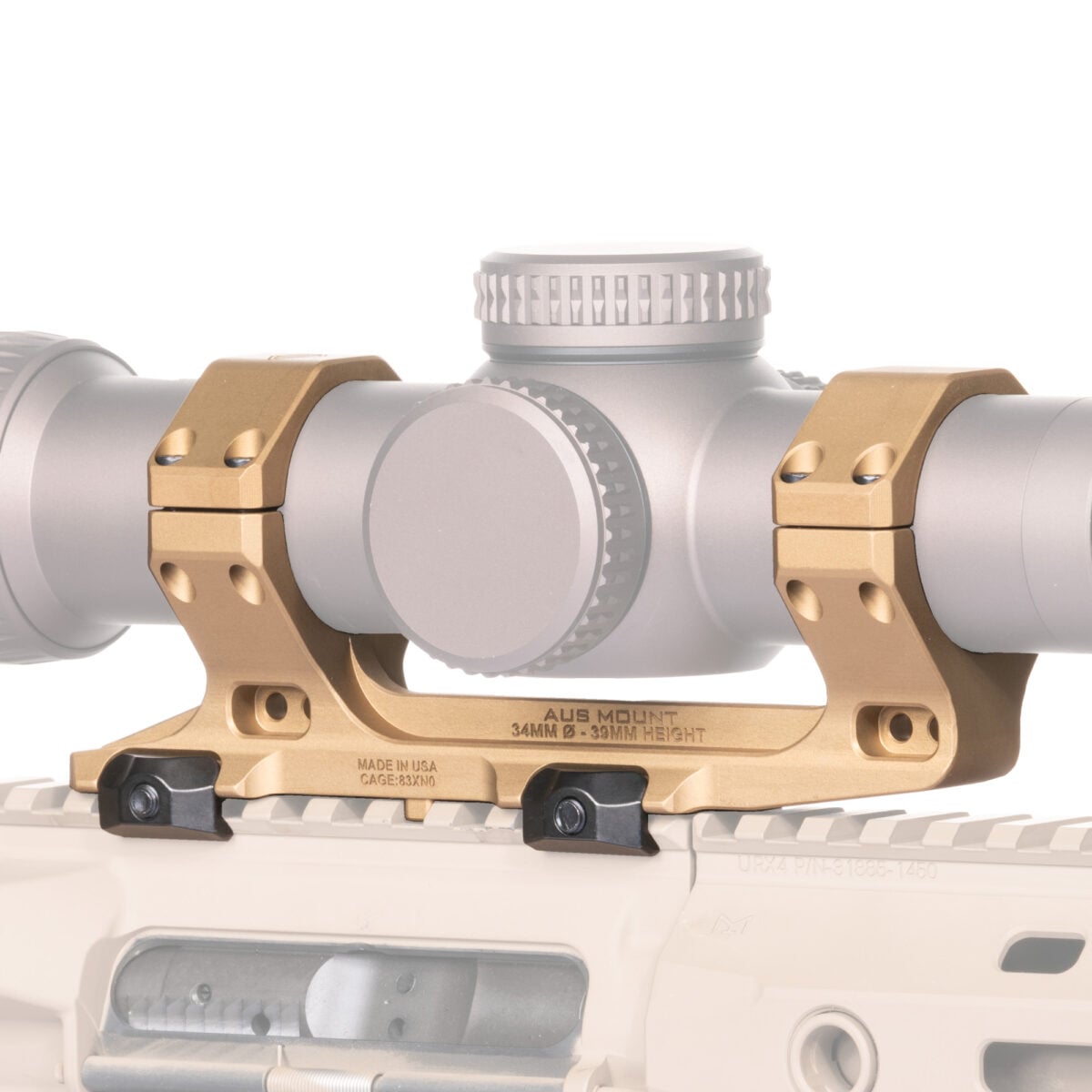
A quality scope mount protects the precision you already paid for in your optic. An expensive scope can offer excellent glass, precise adjustments, and reliable tracking, but none of that matters if the mount allows the optic to move.
That makes the mount one of the most important and least glamorous parts of an optics setup. It does not improve magnification or give you a better reticle. Its job is simpler: hold the scope securely, keep it properly aligned, and stay put.
A cheap mount can become the weak link between a good rifle and a good optic. A well-made mount largely disappears once installed. That is exactly the point.
What Makes a Quality Scope Mount Worth the Money?
The difference between a cheap mount and a premium one is not a logo or a higher price tag. It is the engineering and manufacturing behind the part.
Material, machining tolerances, ring alignment, clamping design, hardware, weight distribution, installation specifications, and manufacturer support all matter. These details determine how consistently the mount holds the optic in place.
You can see the same priorities across several reputable manufacturers. Reptilia machines the AUS Mount from a single piece of billet 7075-T6 aluminum. Geissele uses single-piece 7075-T6 billet construction in its Super Precision mounts, while Badger Ordnance uses 7075-T6 aluminum throughout its Condition One mount lineup. Different companies approach the design differently, but the common theme is controlled manufacturing rather than a generic part built to a price point.
That distinction matters more than the brand name stamped on the side.
Material Matters, But So Does What You Do With It
One hallmark of a premium unibody scope mount is a body machined from a solid billet of high-strength aluminum such as 7075-T6.
Starting with billet gives the manufacturer tight control over the mount’s final geometry. The rail interface, ring locations, structural ribs, pockets, and other critical surfaces can be machined into one rigid piece. Geissele, for example, uses this approach specifically to combine rigidity with strategically removed material rather than simply making the mount heavier.
Reptilia takes a similar approach with the Reptilia AUS Mount, machining the body from a single billet of 7075-T6 aluminum before applying a Type III hardcoat anodized finish.
That does not mean aluminum alloy alone determines quality. A poorly machined piece of premium material is still poorly machined. Likewise, there are reputable mounts that use different alloys and construction methods.
The useful question is not simply, “Is it 7075?” It is, “Was this mount designed and manufactured as a precision component?”
With inexpensive generic mounts, that answer can be much harder to establish.
The Most Important Job Is Holding Zero
A mount has one job above all others: it cannot move.
The relationship between the scope and rifle has to remain consistent through recoil, transportation, handling, and repeated use. If the mount shifts on the rail or allows the optic to move inside the rings, the point of aim and point of impact no longer have the same relationship.
The optic itself may be working perfectly. The mounting system is still failing.
This is why return-to-zero and repeatability matter so much in premium mounts. A precisely manufactured mount can locate itself on a rail more consistently, while a properly engineered clamping system helps resist movement once everything is secured. Geissele specifically uses a single-piece billet base, multiple shear lugs, and a controlled clamping interface to improve rigidity and repeatability.
A quality mount should also provide better repeatability if it needs to be removed and reinstalled. That does not eliminate the need to verify zero after reinstalling an optic. Return-to-zero performance is about minimizing variation, not giving the shooter an excuse to skip confirmation.
For most shooters, this is the strongest argument for spending more on the mount. A high-end scope only delivers repeatable performance if its position on the rifle is equally repeatable.
Can a Scope Mount Affect Accuracy?
A mount does not make the rifle mechanically more accurate. It determines whether the optic stays aligned well enough for the shooter to use the rifle’s existing accuracy consistently.
That difference is important.
If a mount shifts slightly under recoil, your zero can shift with it. If the rings do not hold the scope consistently, the same problem can occur. If the mount itself is poorly aligned, it can also make proper scope installation more difficult.
This is why diagnosing inconsistent point of impact should include the mounting system. Shooters naturally look at ammunition, the optic, or the rifle first. Sometimes the simpler problem is the interface connecting them.
A quality scope mount removes one more variable from that equation.
Machining Quality Is More Than Cosmetics
Good machining is visible, but appearance is only the beginning.
Obvious tool chatter, rough transitions, inconsistent surfaces, or poorly finished edges can be signs that less care went into manufacturing. A perfectly smooth finish does not guarantee performance, but sloppy machining should raise questions about the dimensions you cannot easily inspect.
Ring geometry is especially important.
A scope tube needs even, controlled clamping pressure. The ring bores should be round, correctly sized, and properly aligned with each other. Some premium manufacturers go as far as line-boring their scope rings to maintain precise fit and alignment.
That precision helps the rings hold the optic securely without relying on excessive screw torque.
Good machining also allows manufacturers to remove unnecessary material intelligently. Look closely at a premium unibody mount and you will often see pockets, ribs, curves, and relieved sections. Those features are not there simply to make the mount look complicated. They allow designers to reduce weight while retaining material where the structure needs strength and rigidity.
Making something heavy is easy. Making it light without making it weak takes more thought.
A Better Clamp Is an Engineered System
The rail interface deserves just as much attention as the rings.
There is no single clamping design that defines a good mount. Traditional bolt-and-nut systems can work extremely well when properly engineered. So can low-profile clamp systems. The important distinction is between a complete mounting system designed to manage recoil and a basic piece of hardware doing little more than squeezing two surfaces together.
That usually means looking at the clamp geometry, recoil or shear lugs, hardware quality, contact area, specified torque, and how consistently the mount seats against the rail.
Low-profile hardware can add another practical advantage. Large exposed nuts and bolts can catch on slings, bags, or other gear. A streamlined clamp reduces those protrusions without giving up a secure rail interface.
The Reptilia AUS Mount is a good example. It uses spring-loaded nitrided steel clamps with custom mounting bolts that sit flush with the body, producing a low-profile, anti-snag design on an M1913 Picatinny rail.
That is one solution, not the only solution. The larger point is that premium manufacturers treat the rail interface as an engineered part of the mount rather than an afterthought.
Good Mounts Make Correct Installation Easier
Precision hardware works best when the manufacturer removes guesswork from installation.
A good mount should provide clear torque specifications for both the rail attachment and ring caps. Those numbers matter because hardware needs enough clamping force to remain secure without putting unnecessary pressure on the scope tube.
The manufacturer should also provide a defined tightening procedure where necessary. Proper ring-cap installation typically requires even pressure rather than fully tightening one side and then the other.
Reptilia provides a useful example here. The AUS installation procedure specifies separate torque values for the rail clamps and ring caps, along with an alternating tightening pattern and even ring gaps. Those torque values are also engraved directly on the mount, which means the information stays with the hardware instead of being buried in packaging or an instruction sheet.
It is a small feature with a clear purpose. If a manufacturer knows that installation torque matters, putting the specification on the part makes correct installation easier.
That is the kind of detail worth looking for in any premium mount.
Are Expensive Scope Mounts Worth It?
A more expensive mount is worth the money when the added cost buys better materials, tighter manufacturing, dependable hardware, stronger engineering, and better quality control.
Price by itself proves nothing.
The practical way to think about it is to consider the entire optic system. Putting a bargain-bin mount under a $2,000 scope creates an obvious weak link. All of the precision built into the glass, reticle, erector system, and turrets depends on the scope remaining in one position relative to the rifle.
Saving money on the component responsible for maintaining that position can undermine the reason you bought the expensive optic in the first place.
This does not mean a mount needs to cost a particular percentage of the scope. There is no useful universal formula. It means the quality of the mounting system should match the expectations you have for the rest of the setup.
The more you expect from the rifle, the less sense it makes to gamble on the mount.
A Warranty Is Also a Manufacturing Signal
Warranty coverage does not make a poorly designed product good, but strong manufacturer support tells you something useful.
Premium mount manufacturers know exactly how their products are made, what materials they use, and how much abuse the design should tolerate. When a manufacturer is prepared to support the product for years, it has a financial reason to get the machining, materials, hardware, and quality control right the first time.
Warranty terms vary between manufacturers, so they should never replace an evaluation of the actual product. They are simply another piece of the buying decision.
A bargain mount from an unknown manufacturer may save money today. If there is no clear warranty, installation documentation, replacement hardware, or meaningful customer support behind it, you also know where some of those savings came from.
Do Not Make the Mount the Weak Link
The scope mount is the invisible part of an optics setup that determines whether much of the investment above it actually pays off.
Good glass deserves a stable foundation. Precise turrets deserve a mounting system that stays put. A durable optic deserves hardware built to withstand the same recoil, handling, and field use.
That is what you are buying when you step up to a quality scope mount. Not a prettier piece of aluminum, but better control over one of the most important mechanical relationships on the rifle.
Spend money on the scope because you care about what you can see through it. Spend enough on the mount to make sure it stays where you put it.
Frequently Asked Questions
What Should I Look For In A Quality Scope Mount?
Start with construction, machining, rail attachment, ring geometry, hardware, published torque specifications, and manufacturer support. Billet aluminum unibody construction is common among premium mounts because it allows manufacturers to precisely control critical dimensions while balancing strength and weight. The mount also needs to be the correct diameter and height for your optic and rifle.
Can A Cheap Scope Mount Cause A Loss Of Zero?
Yes. If the mount moves on the rail or the optic moves within the rings, the relationship between the reticle and rifle changes. A well-designed mount minimizes those variables with precise machining, controlled clamping force, quality hardware, and a secure rail interface.
Ready to build an optics setup without a weak link? Shop scope mounts and optics at GrabAGun and choose mounting hardware that matches the quality of the glass you are putting above it.