
Dove Hunting Essentials: What You Need Before Opening Day
Dove hunting essentials are simple, but getting them right before opening day can make the difference between a smooth morning in the field and realizing too late that you brought the wrong shells, forgot a license requirement, or never plugged your shotgun.
September 1 is a common dove opener, but it is not a national opening day. For 2026, all three Texas dove zones open September 1. Alabama opens its North Zone at noon on September 5 and its South Zone at noon on September 12. Florida does not open mourning and white-winged dove season until September 26. Dates, shooting hours, and zone boundaries change by state, so check the current regulations where you plan to hunt.
The weeks before the opener are the time to get your dove hunting gear together, make sure the legal details are handled, and put a few boxes through your shotgun. Doves are not especially difficult birds to bring down, but they are fast, agile, and good at exposing a rusty wingshooter.
What Dove Hunting Essentials Do You Need Before Opening Day?
At the basic level, you need a shotgun you shoot well, the right shells, an appropriate choke, enough ammunition for the day, and any licenses, permits, or certifications required where you hunt. Decoys can add another advantage, but they come after the fundamentals.
The shotgun and shell combination matters, but familiarity matters just as much. If your shotgun has spent the summer in the safe, get to a clay range before opening day. Sporting clays, skeet, or a simple round of trap gives you a chance to work on your mount, swing, and follow-through before the first bird of the season comes across the field.
Then pattern the gun on paper with the same choke and ammunition you plan to hunt with. That tells you something clay targets cannot: what your pattern actually looks like at the distances you expect to shoot.
Choose A Shotgun You Can Shoot Well
There is no single best action type for dove hunting.
Semi-automatic shotguns are a popular choice because they offer quick follow-up shots and can soften felt recoil depending on the operating system. Pump-actions are simple, dependable, and often more affordable. Over-unders and side-by-sides remain excellent field guns for hunters who prefer the balance and simplicity of a break-action.
For gauge, 12 and 20 gauge are the practical standards. A 12-gauge gives you a wide selection of loads and plenty of pattern density. A 20-gauge can do the job cleanly with less gun weight and, with comparable loads and gun designs, with generally less recoil.
A 28-gauge or .410 bore can work too. Both bring lighter payloads, which leaves less room for error on a small, fast-moving target. That can be appealing to experienced wingshooters looking for an added challenge, while a properly fitted lighter-gauge shotgun may also appeal to shooters who are sensitive to recoil. GrabAGun carries dove and upland loads across 12, 20, 28 gauge, and .410 bore.
The best dove gun is ultimately the one you can mount naturally, swing smoothly, and shoot consistently.
Plug Your Shotgun Before You Leave Home
This is one detail you do not want to discover in the field.
Federal migratory bird rules prohibit hunting doves with a shotgun capable of holding more than three shells in the magazine and chamber combined. If the shotgun can hold more, it must be fitted with a one-piece plug that cannot be removed without disassembling the gun.
That rule matters most with semi-autos and pumps, many of which are built with magazine capacities greater than the migratory bird limit. Break-actions already hold two shells.
Check the plug at home. Load the gun safely with inert dummy rounds if necessary and verify its capacity before opening morning. A shotgun that functions perfectly is still the wrong shotgun for the hunt if it is not configured legally.
What Choke Is Best For Dove Hunting?
Modified is a useful all-around starting point for dove hunting, especially when birds are passing at moderate distances. If birds are working decoys and most shots will be inside roughly 30 yards, improved cylinder gives you a more open pattern and can make more sense.
Those choices line up with the basic job of each constriction. Improved cylinder is generally suited to closer shots, while modified maintains greater pattern density as distance increases. Browning places improved cylinder around the 30 to 35-yard range and modified around 35 to 40 yards as general references.
Do not treat those numbers as guarantees. Choke markings tell you constriction, not exactly how your individual shotgun and load will pattern.
Put your hunting load on paper at 25, 30, 35, and 40 yards. If most of your birds will be hovering over decoys at 25 yards, there is little advantage in shooting a tight pattern built for long crossing shots. If you are pass-shooting birds that refuse to work close, a little more constriction may help.
The right choke is the one that produces a useful, even pattern at your actual shooting distance.
What Shot Size Is Best For Dove Hunting?
Doves do not require especially large shot. The challenge is putting enough pellets into the right place while the bird is moving.
Shot sizes from No. 6 through No. 8 cover most dove-hunting situations, with No. 7½ and No. 8 among the most common choices for early-season hunting. GrabAGun’s current dove-ammunition selection includes both 12 and 20-gauge loads in No. 7½ and No. 8, along with other options for different conditions.
No. 7½ is a particularly useful middle ground. It provides a dense pellet count while retaining enough individual pellet energy for typical dove distances. Hunters expecting closer shots may favor No. 8, while No. 6 or No. 7 can make sense when conditions push shooting distances farther out.
Pay just as much attention to shot material as shot size.
Federal non-toxic shot requirements apply to waterfowl and coots, not doves nationwide, but state and property rules can be stricter. California requires nonlead ammunition when taking any wildlife with a firearm. Other states require non-toxic shot on specific wildlife areas or dove fields.
Do not assume the lead shells you used on private land last year are legal everywhere you hunt this year. Check before buying a case.
Decoys Can Give You A Real Advantage
Doves are visual birds, and decoys can help turn birds that would otherwise pass at a distance into closer opportunities.
A few passive dove decoys placed where incoming birds can see them can create the appearance of birds feeding or gathering safely. Motion adds another level of visibility. The MOJO Voodoo Dove is one example available through GrabAGun. It uses spinning wings, a realistic landing posture, and a steel support pole to create movement in a compact setup.
You do not need an elaborate spread. The goal is to give passing birds something visible to investigate and, ideally, pull their line of travel toward a safe shooting lane.
Check the current rules before using an electronic or motion decoy. Decoy and electronic-device regulations can vary between states and individual public hunting areas. Artificial decoys are legal for migratory game birds in Texas, for example, but that does not make every decoy legal everywhere in the country.
Decoys are an advantage, not a substitute for scouting. Put them where doves already want to travel.
Get Your License And Regulations Straight
Do not wait until the night before the hunt to figure this part out.
Migratory bird hunters are required to participate in the Harvest Information Program, commonly called HIP. States administer that requirement through their own licensing systems, and additional state stamps, validations, or endorsements may apply.
Texas is a good example. Dove hunters need the appropriate hunting license, HIP certification, and, for hunters age 17 or older, a Texas Migratory Game Bird Endorsement. Texas also requires hunter education for hunters born on or after September 2, 1971, subject to the state’s age, supervision, deferral, and exemption rules. Proof of certification or deferral must be available while hunting.
A Federal Duck Stamp is for waterfowl hunting, not dove hunting. State migratory bird requirements are separate.
Also check the daily bag limit, possession limit, legal shooting hours, and any species-specific restrictions. Do not assume the rules from the county you hunted last year are identical to the rules where you are going this year.
Learn To Identify Doves Before They Are In Range
Bird identification needs to happen before you pull the trigger.
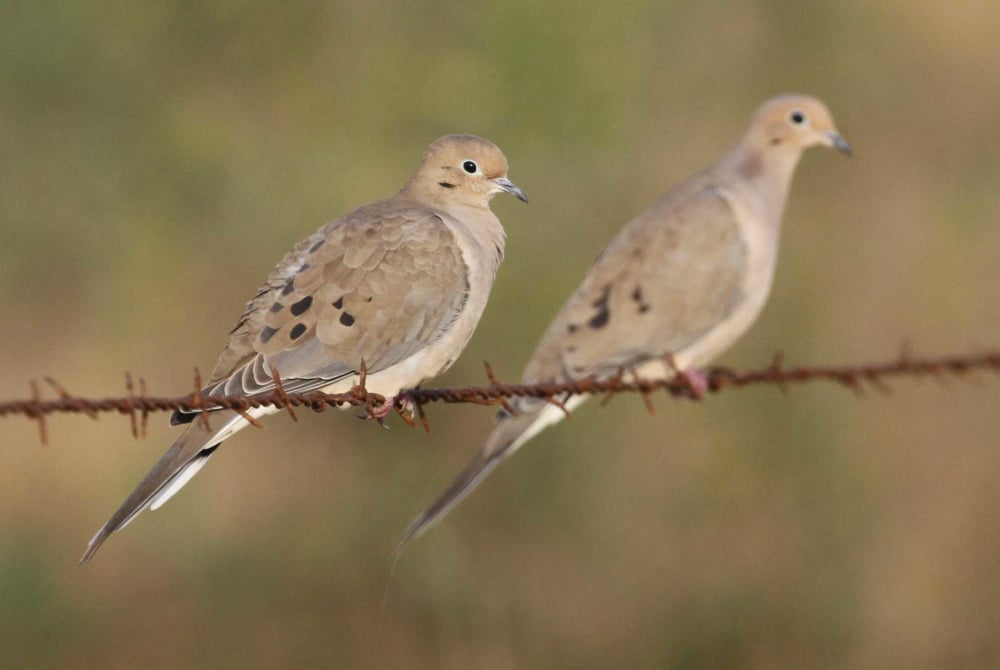
Mourning doves can be identified by their pointed tails and black spots on the wings. White-winged doves have the obvious white wing bar that gives the species its name and a more rounded tail. Eurasian collared-doves are larger and pale gray with a narrow black collar on the back of the neck.
The legal treatment of those species can differ by state. That makes quick identification more than a birding exercise. It is part of knowing what is legal to shoot and how the bird counts toward your limit.
Spend a few minutes with your state’s current dove identification guide before the season. You want the differences to be familiar before a bird is crossing at speed.
Hunt Where Doves Already Want To Go
The best dove hunting gear cannot compensate for sitting where there are no birds.
Doves concentrate around food, water, grit, and roosting cover. Grain fields, harvested agricultural ground, sunflowers, and areas with waste seed can all draw feeding birds. Doves also need regular access to water, and they use small gravel and grit to help grind seeds in the gizzard.
That creates a simple scouting strategy. Early in the day, watch feeding areas and the flight paths birds use to enter them. Later, pay attention to watering areas, bare or gravelly ground, staging areas, and routes toward roosting trees.
Scout flight lines as much as individual fields. Fences, streams, tree lines, and similar linear features can influence how birds move across a property.
There is one major legal distinction around food: attracting doves naturally is not the same thing as baiting them. Doves can legally be hunted over many normally planted, harvested, or manipulated agricultural fields, but placing grain or feed to attract migratory birds creates a baited area. If you are unsure why grain is present in a field, do not hunt it until you know the field is legal.
Get The Details Right Before The First Bird Flies
Dove hunting does not require a truckload of equipment. It rewards getting a short list of important things right.
Shoot a shotgun that fits you. Plug it to the legal three-shell capacity. Pattern your choke and hunting load instead of guessing. Bring enough shells. Use decoys when they fit the situation. Know your license, HIP, hunter-education, and bag-limit requirements. Most importantly, know exactly what bird you are looking at before you shoot.
Then spend some time on clays.
Of all the dove hunting essentials you can prepare before opening day, a few boxes of practice ammunition may do more for your hunt than adding another piece of equipment to your bag.
Frequently Asked Questions
How Many Shells Can You Have In A Shotgun While Dove Hunting?
A shotgun used for migratory bird hunting cannot be capable of holding more than three shells in the chamber and magazine combined. Shotguns with greater capacity must use a one-piece plug that cannot be removed without disassembling the gun.
Is A 12 Or 20 Gauge Better For Dove Hunting?
Both work well. A 12-gauge generally gives you more load choices and greater payload capacity, while a 20-gauge can offer a lighter, softer-shooting setup. Choose the shotgun you can mount, swing, and shoot most consistently.
Do You Need Non-Toxic Shot For Dove Hunting?
Not everywhere. Federal non-toxic shot rules do not require non-toxic ammunition for dove hunting nationwide, but states and individual public hunting areas can impose stricter rules. California requires nonlead ammunition for all wildlife taken with a firearm, so always check the regulations for the exact property and state you plan to hunt.
Getting ready for opening day? Shop shotguns, ammunition, choke tubes, decoys, and other dove hunting gear at GrabAGun so the equipment side of the hunt is handled before the birds start moving.